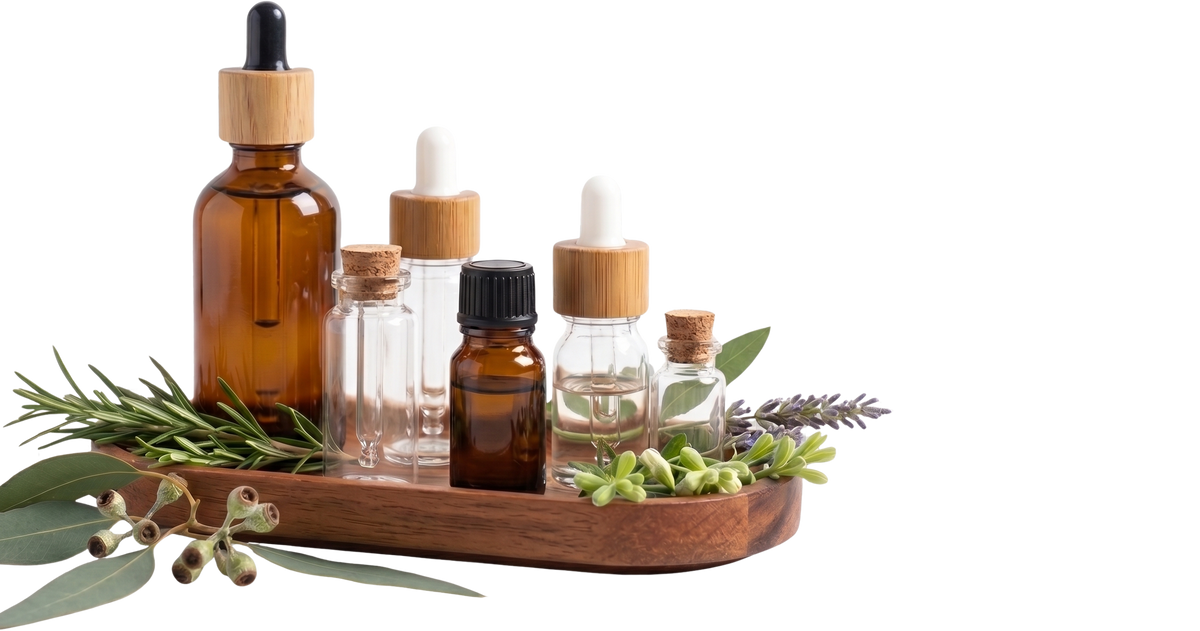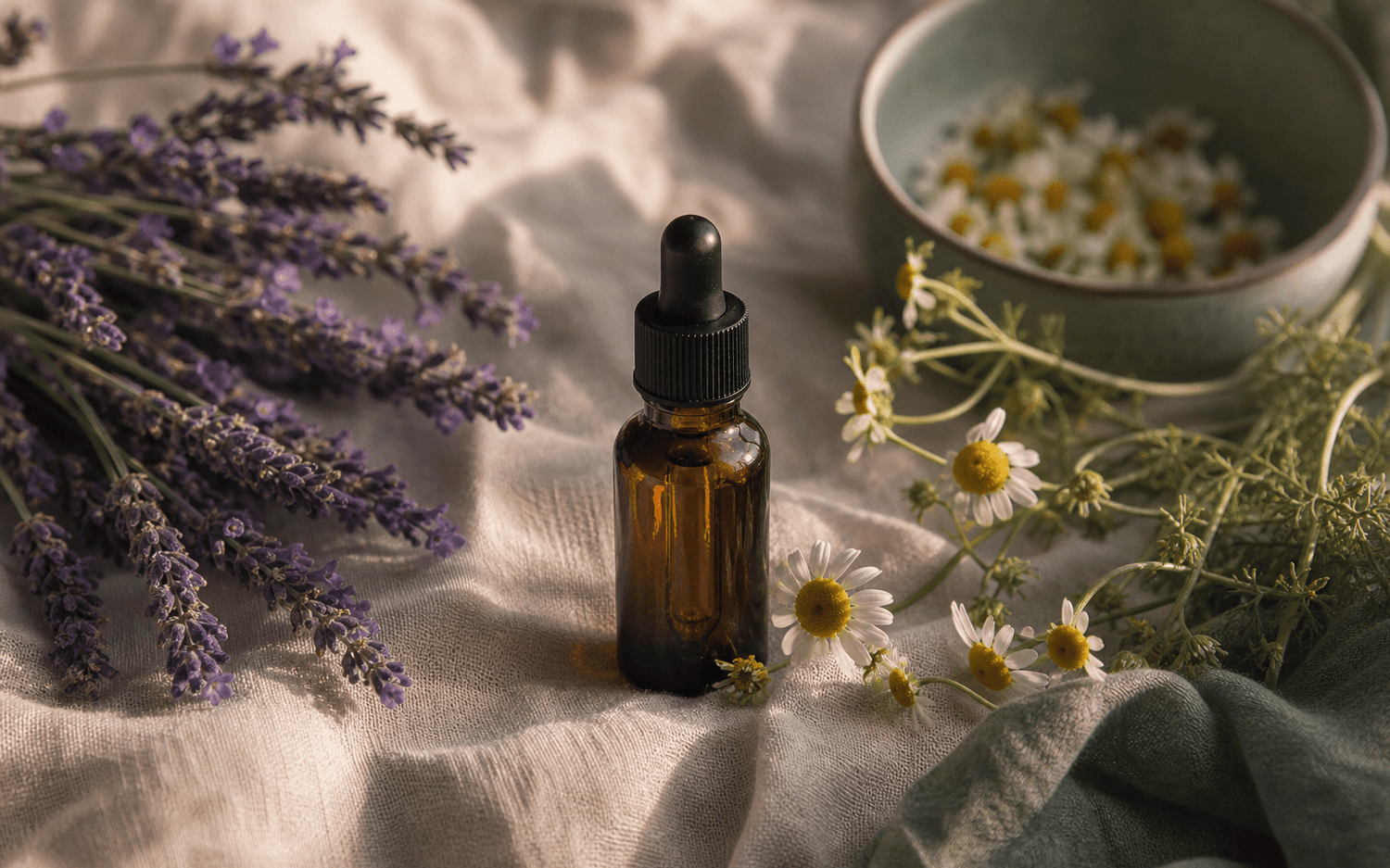
Lavender, chamomile and a quiet handful of other essential oils for sleep have earned their place on the bedside table for good reason: they're some of the most studied, best-loved aromatics in the formulator's toolkit, and they smell like the moment your shoulders finally drop after a long day.
If you make your own pillow mists, balms and bath blends, knowing which oils to reach for, and how they differ from one another, is the difference between a fragrance that simply smells pleasant and one that genuinely helps signal "wind down" to the senses. Here's how to choose, blend and use essential oils for sleep with confidence.
What makes an essential oil good for sleep?
Not every soothing scent belongs in a night-time blend. The essential oils traditionally used for relaxation and restful sleep tend to share certain aromatic characteristics: soft, warm, herbaceous or floral notes rather than sharp, bright or stimulating ones. Many are rich in naturally occurring constituents such as linalool and linalyl acetate, which give them their gentle, calming character.
The classic candidates are lavender, Roman chamomile, sweet marjoram, clary sage, vetiver and sandalwood. Each brings something different to the table, and understanding those differences is what turns a generic "relaxing blend" into something tailored.
Lavender: the benchmark every other oil is measured against
Lavender (Lavandula angustifolia) is the obvious starting point, and for good reason. It's versatile, widely available, generally well-tolerated and blends with almost everything. If you only ever stock one essential oil for sleep, this is it. Its soft floral-herbaceous profile is the scent most people instinctively associate with bedtime.
What sets lavender apart from the alternatives below is its sheer flexibility. Where vetiver can dominate a blend and clary sage divides opinion, lavender plays beautifully as either a soloist or a supporting note.
Roman chamomile: gentler and apple-sweet
Roman chamomile (Anthemis nobilis) is softer and sweeter than lavender, with a warm, slightly fruity, apple-like aroma. It's a lovely choice for blends aimed at children's rooms or sensitive noses (always at appropriate, conservative dilutions). Compared with lavender, it's more delicate and considerably more precious, so a little goes a long way.
Sweet marjoram and clary sage: the herbaceous comforters
Sweet marjoram (Origanum majorana) brings a warm, herbal cosiness, while clary sage (Salvia sclarea) is earthy, slightly heady and traditionally used in relaxing blends. Clary sage is the most polarising of the bunch, some adore it, some find it overpowering, so introduce it in small amounts and build up.
Vetiver and sandalwood: the grounding base notes
Where lavender and chamomile sit in the top-to-middle range, vetiver (Vetiveria zizanioides) and sandalwood (Santalum album) are deep, woody base notes that anchor a blend and give it staying power. Vetiver is intensely earthy and a tiny drop is plenty; sandalwood is creamy, smooth and quietly luxurious. Add either to a lavender blend and you transform something pretty into something properly restful.
How to use essential oils for sleep in your formulations
The beauty of these oils is how many formats they suit. Here are a few formulator-friendly approaches.
Pillow and room mists
A light mist is one of the simplest sleep products to make. Disperse your essential oils into a small amount of solubiliser before adding your water phase, otherwise the oils will float as droplets rather than blending evenly. This is the single most common mistake we see. Neat essential oils will not dissolve into water on their own.
Balms and roller blends
A "sleep balm" for pulse points or temples is a lovely leave-on format. Blend your chosen essential oils into a carrier such as Jojoba Oil (INCI: Simmondsia Chinensis Seed Oil) or Sweet Almond Oil (INCI: Prunus Amygdalus Dulcis Oil). Keep essential oil concentrations low for leave-on products applied to the skin, and always follow current IFRA guidance for the specific oils you're using.
Bath and shower products
A warm evening bath is the perfect delivery system for relaxing aromatics. Because essential oils don't disperse in bathwater alone, blend them first into a carrier oil or a suitable solubiliser so they're properly dispersed rather than sitting on the surface.
Blending tips for a balanced sleep aroma
Think in terms of top, middle and base notes. Lavender and clary sage sit in the top-to-middle range; chamomile and marjoram in the middle; vetiver and sandalwood at the base. A blend that draws from all three tiers feels rounded and lingers gently rather than fading the moment you've drifted off.
A reliable starting framework: lead with lavender, soften with a touch of Roman chamomile, and ground with the smallest whisper of vetiver. Adjust from there. Trust your nose. Sleep blends are deeply personal, and what reads as "restful" varies from person to person.
A word on safety
Essential oils are potent concentrated plant extracts. Always dilute them appropriately in a carrier, keep within current IFRA limits for the format you're making, and never apply neat to skin. We recommend a patch test before use, and extra caution with blends intended for children, during pregnancy, or for anyone with sensitive skin. These products are intended to support relaxation through pleasant aroma. Not to treat any sleep condition.
Frequently asked questions
Q: Which is the best essential oil for sleep if I'm just starting out?
A: Lavender (Lavandula angustifolia) is the most reliable first choice. It's versatile, widely tolerated and blends with almost anything. Once you're comfortable, layer in Roman chamomile for sweetness or a drop of vetiver for grounding depth.
Q: Can I add essential oils for sleep directly into a pillow mist?
A: Not neat. Essential oils won't dissolve into water and will float as droplets. Disperse them into a solubiliser first, then add your water phase so the blend stays evenly mixed.
Q: How much essential oil should I use in a sleep balm?
A: Keep concentrations low for leave-on skin products and always follow current IFRA guidance for each oil. Blend into a carrier such as jojoba or sweet almond oil rather than applying any essential oil directly to skin.
Q: Are essential oils for sleep safe during pregnancy or for children?
A: Some oils, including clary sage, are best avoided or used with extra caution in these situations. Always seek professional advice, dilute conservatively, and patch test before use.
Q: Why does my sleep blend fade so quickly?
A: It's likely top-note heavy. Adding a base note such as vetiver or sandalwood anchors the blend and helps the aroma linger gently through the night.
Ready to build your own sleep blend?
Start with a bottle of lavender essential oil as your anchor, then explore grounding base notes and a soothing carrier to round things out. Pair your chosen oils with Jojoba Oil for a smooth, skin-loving roller blend, or Sweet Almond Oil for a nourishing bath and balm base. Browse the Aromantic essential oils and carrier collections to gather everything you need, and have fun blending your own night-time ritual. Your bedside table will thank you.